
Electrical
Signs Your Villa Needs Rewiring
Published 23 July 2026· Interior Fixers Technical Services Team
Quick Answer
Warning signs your villa needs rewiring include frequently tripping breakers, flickering lights when appliances switch on, warm or discoloured switches and sockets, a persistent burning smell, buzzing from outlets or the DB panel, and an old fuse box instead of a modern breaker panel. A professional inspection confirms whether you need a full rewire or a targeted fix.
Villa wiring doesn't announce itself the way a leaking pipe or a broken tile does -- it degrades quietly behind walls and inside a distribution board, and the first sign most homeowners notice is something small and easy to explain away. A breaker trips once, a light flickers for a second, a switch feels a little warm. Individually, none of these seem urgent. Together, or repeated over weeks, they're exactly the pattern that should prompt a proper electrical inspection rather than another shrug.
Warning Signs to Watch For
Circuit breakers that trip frequently
A breaker is designed to trip occasionally -- that's it doing its job when a circuit is overloaded. But if the same breaker trips repeatedly, or several breakers trip during normal daily use, that's the panel telling you the circuits are being asked to carry more than they were designed for, or that there's a fault somewhere in the wiring pulling excess current.
Flickering or dimming lights
Lights that flicker or dim briefly when the AC compressor kicks in, a kettle switches on, or another high-draw appliance starts up point to a voltage drop caused by wiring that can't comfortably handle the load, or a loose connection somewhere in the circuit. Occasional flickering during a power fluctuation is normal; flickering that happens predictably every time a specific appliance switches on is not.
Warm or discoloured switches and sockets
A light switch or socket that feels warm to the touch, or shows yellowing, browning or scorch-like discolouration around the plate, is a direct sign of excess heat building up at that connection point -- usually from a loose wire, a degraded connection, or an overloaded circuit. This is one of the more serious signs on this list and shouldn't wait.
A persistent burning smell with no obvious source
A faint, persistent burning or hot-plastic smell that doesn't trace back to cooking, a candle, or an obvious appliance issue can mean wiring insulation is overheating somewhere inside a wall or ceiling void. This is not a sign to monitor and wait on -- it warrants an inspection as soon as reasonably possible.
Visible scorch marks around outlets
Any black or brown scorch marking on or around a socket or switch plate means arcing or overheating has already happened at that point. The outlet should be treated as unsafe to use until it's inspected, regardless of whether it still appears to work normally.
Buzzing or crackling sounds from outlets or the DB panel
Electrical connections should be silent. A buzzing, humming or crackling sound coming from a socket, switch, or the distribution board itself usually means a loose connection or arcing, and it's one of the more reliable audible signs that something needs attention rather than a benign quirk of the wiring.
An outdated fuse box instead of a modern breaker panel
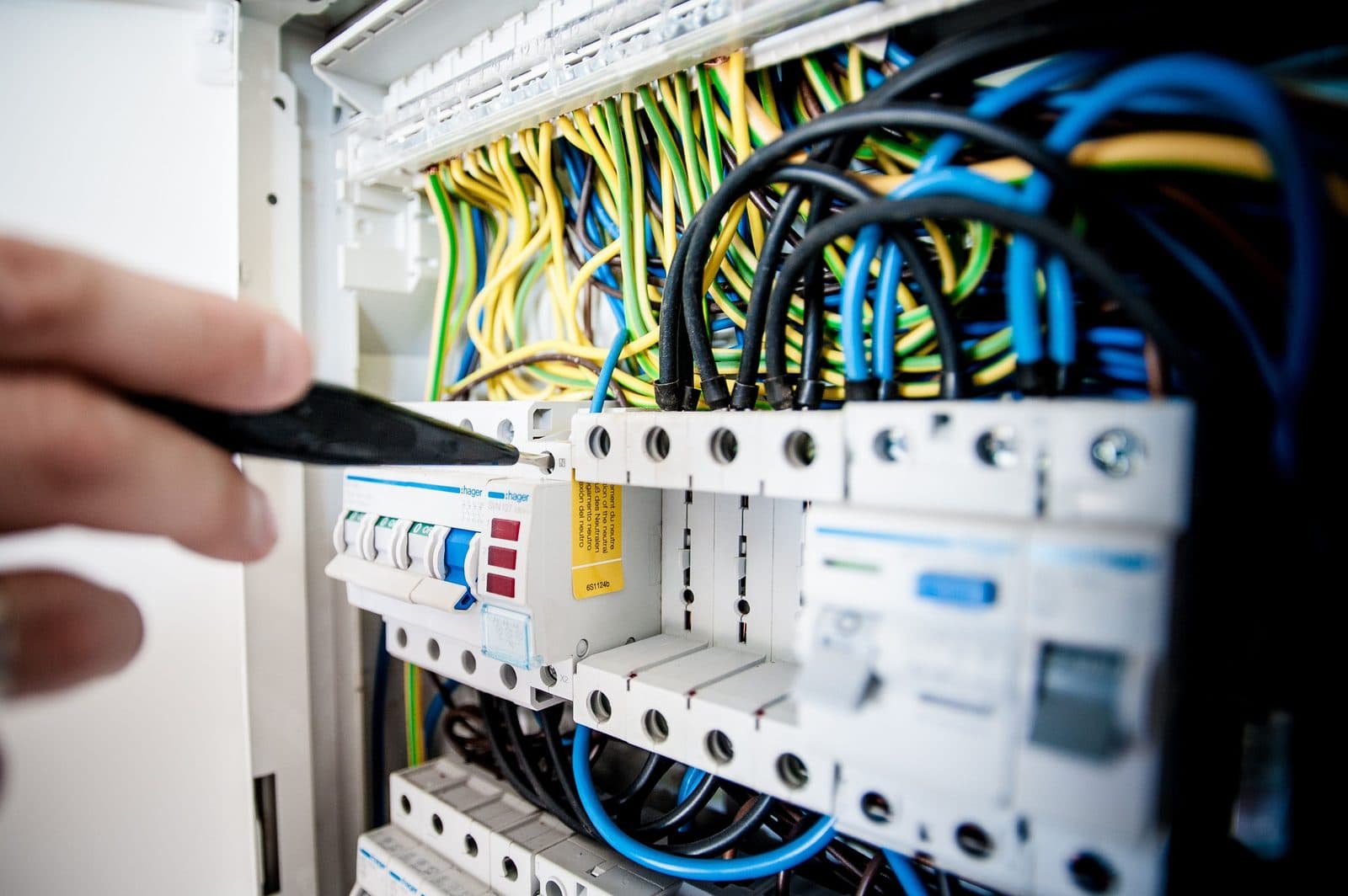
If your villa still has an old-style fuse box with rewireable fuses rather than a modern circuit-breaker distribution board, that alone is a strong signal the electrical system predates current safety expectations. Modern DB panels offer better protection, easier fault isolation, and typically include residual current devices (RCDs) for earth-leakage protection that older fuse boxes generally lack.
Not enough sockets for how the home is actually used
If every room relies on multi-socket extension boards and extension cords running across floors just to power everyday appliances, that's a symptom worth paying attention to, not just an inconvenience. Villas built with fewer sockets than modern households need -- more TVs, more chargers, kitchen appliances, home office equipment -- often end up with circuits carrying more simultaneous load than they were designed for, with extension cords quietly absorbing the gap.
Older villas with original wiring
Villas built decades ago were wired for the appliance loads of their time -- fewer air-conditioning units, no widespread use of high-draw kitchen appliances, far less simultaneous electronic load than a modern household runs today. Wiring that was adequate when the villa was built can be genuinely undersized for how the same home is used now, even if it's shown no obvious fault yet. Age on its own isn't proof of a problem, but it's a reasonable trigger to get an inspection rather than assume everything installed years ago is still fit for current use.
Why This Matters: The Real Risk
The common thread behind every sign above is heat building up somewhere it shouldn't -- at a loose connection, inside degraded insulation, or in a cable carrying more current than it's rated for. Left unaddressed, that heat is an electrical fire risk. It's also the reason none of these signs should be individually dismissed just because the lights still turn on and nothing has failed yet -- electrical faults tend to develop gradually before they fail suddenly.
Full Rewire vs. Targeted Fix: You Don't Always Need the Bigger Job
One of the most common misconceptions is that any of these signs automatically means a full rewire. That's usually not the case. A full rewire -- replacing all the cabling in the villa and typically upgrading the DB panel -- is the right call when an inspection finds widespread issues: degraded insulation throughout, an undersized system relative to the home's actual load, or a fuse box that needs replacing along with the circuits feeding it. But a lot of the symptoms above -- a single warm switch, one breaker that trips, buzzing from one specific outlet -- can be isolated to a single faulty connection or a localised circuit issue and fixed without touching the rest of the villa's wiring. The only way to know which situation you're in is a proper inspection; guessing at the scope before that inspection, in either direction, tends to either waste money or leave a real risk unaddressed.
What a Professional Inspection Actually Checks
- DB panel condition -- whether it's a modern breaker panel or an outdated fuse box, whether breakers are correctly rated for their circuits, and whether RCD earth-leakage protection is present and functioning.
- Cable insulation condition -- checking for degraded, cracked or overheated insulation on accessible cabling and at connection points, which is often where the earliest signs of trouble show up.
- Load capacity -- assessing whether the existing circuits can safely handle the home's actual current appliance and AC load, not just the load the system was originally designed for.
- Earthing and grounding -- confirming the villa has a proper, continuous earth connection throughout, since inadequate earthing is a factor in both electric shock risk and fire risk.
If you're seeing any combination of the signs above, the right next step is an inspection, not a guess. We assess the panel, the wiring, and the load, and give you a clear picture of whether you're looking at a targeted repair or a full rewire -- with the reasoning behind it, not just a recommendation to take on faith.
Need this sorted at your place?
Book a free site survey and get a tailored quote — anywhere in Dubai & the UAE.
Frequently Asked Questions
Question not answered here? Ask us directly — we’ll reply the same day.
No. A breaker that trips occasionally under a specific heavy load is often a sign that one circuit needs rebalancing or a single appliance needs its own dedicated circuit, not that the whole villa needs rewiring. Frequent tripping across multiple circuits, especially alongside other signs like warm switches or a burning smell, points to a broader issue that warrants a full inspection to determine the actual scope of work needed.
There's no fixed age that automatically means a problem, but villas wired decades ago were designed for the appliance and AC loads of their time, which is often lighter than what a modern household draws today. If your villa has original wiring and you're also seeing symptoms like frequent breaker trips, flickering lights, or reliance on extension cords for daily appliances, that combination is a reasonable trigger for an inspection regardless of the exact age.
Yes, a warm or hot switch or socket indicates heat building up at a connection, which is an active electrical fire risk rather than a cosmetic issue. We'd recommend not using that outlet until it's been inspected, and treating it as a priority rather than something to monitor over time.
A fuse box uses rewireable fuses that need to be manually replaced when they blow, while a modern distribution board (DB panel) uses circuit breakers that trip and can be reset, and typically includes RCDs for earth-leakage protection. An outdated fuse box generally offers weaker protection against faults and overloads than a modern DB panel, and its presence in a villa is a reasonable signal that the wider electrical system may be due for an upgrade.
Not an accurate one. Whether a villa needs a full rewire, a partial rewire, or a targeted repair depends entirely on what's found in the DB panel, the cable insulation, the load capacity, and the earthing -- none of which can be reliably assessed without physically inspecting the property. We carry out a proper inspection first so any quote reflects the actual scope of work rather than a guess.